In short

What to know before you go.

Time neededHalf a day (3 to 5 hours) for the main sites, or a full day to see every stupa
How easyEasy — flat ground, but spread over a wide area; shoes and hats come off at every stupa and shrine
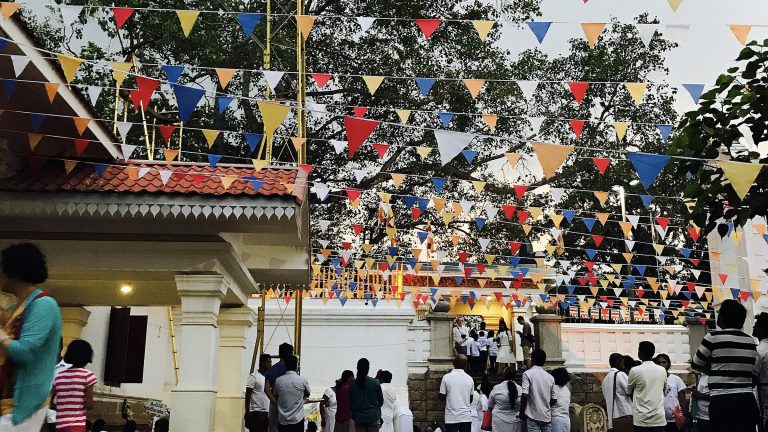
Best timeEarly morning, or a Poya (full-moon) evening, when the stupas are lit by oil lamps and pilgrims gather
EntryTicketed for the main sacred area; the Sri Maha Bodhi tree shrine itself has no entry fee

About this place

Researched by Sarisara, with sources.

About this activity

Anuradhapura was Sri Lanka’s capital for well over a thousand years, starting many centuries before the modern calendar began, and is considered the cradle of Theravada Buddhism on the island. Unlike Sigiriya or Polonnaruwa, it is still a living place of worship today, not only a set of ruins — pilgrims visit every day, and the crowds grow much larger on Poya, the monthly full-moon holy day.

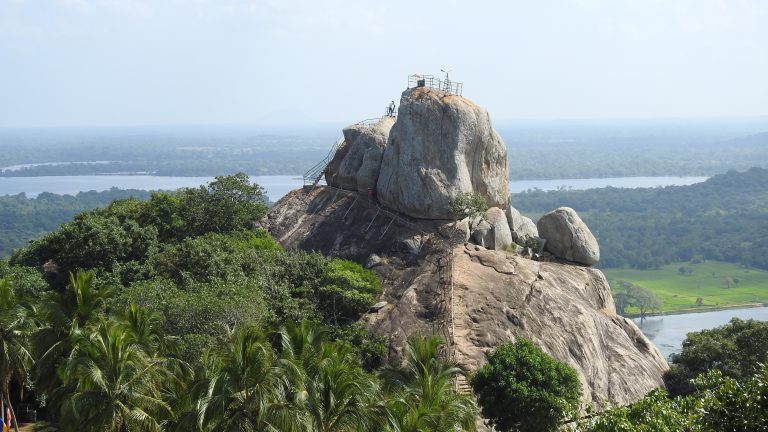
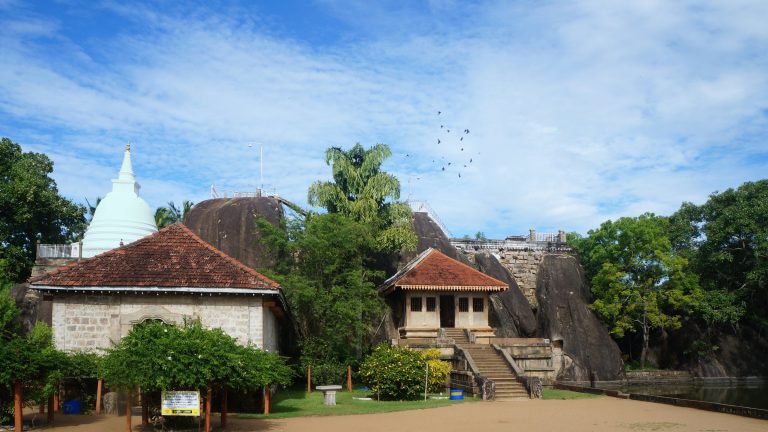
At the centre of the sacred city stands the Sri Maha Bodhi, said to be the oldest documented tree in the world grown from a known cutting: tradition holds that it grew from a branch of the actual tree under which the Buddha reached enlightenment in India, brought to Sri Lanka and planted here. Nearby rise two of the largest stupas ever built in brick, the Ruwanwelisaya and the Jetavanaramaya, both domed monuments that once ranked among the tallest structures in the ancient world. The Abhayagiri area adds its own dagoba, the carved Samadhi Buddha statue, and the Kuttam Pokuna, a pair of ancient bathing ponds built for the monks who lived here by the thousand.

UNESCO listed the Sacred City of Anuradhapura as a World Heritage Site in 1982. Because the holy area is spread across more than 100 square kilometres, most visitors use a bicycle or a tuk-tuk to move between the different stupas rather than walking the whole distance. Many of the walking areas around the biggest stupas are barefoot zones, so the heat of the stone under your feet is as much a part of the visit as the history.

Entrance ticket

Entrance tickets are not included in Sarisara prices. Please pay them in cash at the gate.

  • Foreign visitor (adult)USD 30
  • Foreign visitor (child)USD 15
  • Visitor from a South Asian (SAARC) country (adult)USD 15

Last checked: 21 Oct 2026. Prices are set by the temple and can change.

From the Central Cultural Fund's own price list (ccf.gov.lk, read 20 Oct 2026), covering the Jetavanaramaya and Abhayagiri sacred areas. The Sri Maha Bodhi tree shrine itself has no entry fee. Not included in your Sarisara price — paid at the gate in Sri Lankan rupees at the day's rate, or by card.

What to wear

Cover your shoulders and knees, remove shoes and any hat at every stupa and shrine, and dress modestly throughout — this is a living pilgrimage site, not only a ruin.

Wear

  • A top with sleeves covering the shoulders
  • Trousers, a long skirt, or a dress below the knee
  • White or light-coloured clothing is traditional and welcomed, though not compulsory
  • Socks for the hot stone paths around the big stupas at midday

Avoid

  • Shorts or short skirts
  • Sleeveless tops
  • Tight or revealing clothing
  • Shoes or sandals on any stupa platform

Not dressed right? Anuradhapura is an active pilgrimage site, and the cover-up rule is enforced at every stupa the same way it is at a working temple. No rental service for cover-ups is confirmed at every entrance, so dress correctly before you arrive.

How to behave

Please do

  • Walk clockwise around every stupa, keeping it on your right
  • Take your shoes and any hat off before stepping onto a stupa platform
  • Keep your voice low — this is a place of active prayer, not a museum
  • Let monks and pilgrims doing their rounds go first
  • Carry socks for the hot stone paths
  • Visit the Sri Maha Bodhi respectfully — it is one of the most sacred trees in Buddhism

Please do not

  • Do not pose with your back to a stupa or Buddha statue
  • Do not point your feet at a Buddha statue or the Bodhi tree when sitting
  • Do not climb on any stupa, wall or carving
  • Do not touch monks or any offering left at a shrine
  • Do not bring alcohol onto the sacred grounds
  • Do not play loud music

Allowed and not allowed

Allowed

  • Photography in the open grounds and of the stupas from a respectful distance
  • Walking the wide sacred area between stupas at your own pace

Not allowed

  • Shoes or hats on any stupa or shrine platform
  • Posing with your back to a Buddha image or stupa
  • Climbing on any ruin or carving
  • Drones without prior approval from the Department of Archaeology and the Civil Aviation Authority
  • Alcohol anywhere on the sacred grounds

What to bring

  • Water and a hat — the sacred area is large and mostly open
  • Socks for hot stone paths
  • A light scarf for extra cover if needed
  • Cash for the gate ticket
  • Comfortable walking shoes you can remove easily

Opening times

Opening hours

  • Open every day, About 7:00 AM to 6:00 PM for the main sacred area; the Sri Maha Bodhi tree shrine itself is reported to keep separate hours, roughly 6:00 AM-12:00 PM and 2:00 PM-9:00 PM

Special days

  • Poya (full-moon) days bring far more pilgrims and a special evening atmosphere with oil lamps
  • Since this is an active pilgrimage site, Buddhist festival periods can also bring larger crowds

No official page giving hours for the whole sacred city was found; the hours above come from independent travel guides only and should be checked with your guide.

Good to know

  • This is a living pilgrimage site, not only a ruin — expect monks, pilgrims and ongoing worship at the main stupas
  • The site is very spread out; a bicycle or tuk-tuk makes it much easier than walking between stupas
  • The Sri Maha Bodhi is said to be the oldest documented tree in the world grown from a known cutting, and draws its own steady queue of pilgrims
  • Shade is limited around the big stupas — carry water
  • Toilets are available near the main entrance areas
  • Extra security checks may apply near the most sacred shrines

Who runs this place

Central Cultural Fund and the Anuradhapura Preservation Board (Government of Sri Lanka) Official website

Where it is

Anuradhapura, Anuradhapura District, Sri Lanka

In the same area

Trips, experiences and stays in and around Anuradhapura.

Experiences

MayFestival

Anuradhapura · Anuradhapura District

Poson

A Sarisara place
Entry not in trip price
Attraction

Anuradhapura

Sri Maha Bodhi

A Sarisara place
Ticket paid at the gate
Attraction

Anuradhapura

Ritigala

A Sarisara place
Ticket paid at the gate
See everything in Anuradhapura →
Photo credits
  • Photo 1: Sri Lankan Stupa Across Still Waters — Sarisara Lanka
  • Photo 2: Ancient Sri Lankan Bathing Pool — Sarisara Lanka
  • Photo 3: Ancient Sri Lankan Stupa in Morning Light — Sarisara Lanka
  • Photo 4: Banyan Roots Among Ancient Sri Lankan Stones — Sarisara Lanka
  • Photo 5: Hands, rice, and a gold bowl — Sarisara Lanka
  • Photo 6: Saffron Robes by Weathered Stone — Sarisara Lanka
  • Photo 7: Sri Lankan Stupa Under Blue Skies — Sarisara Lanka