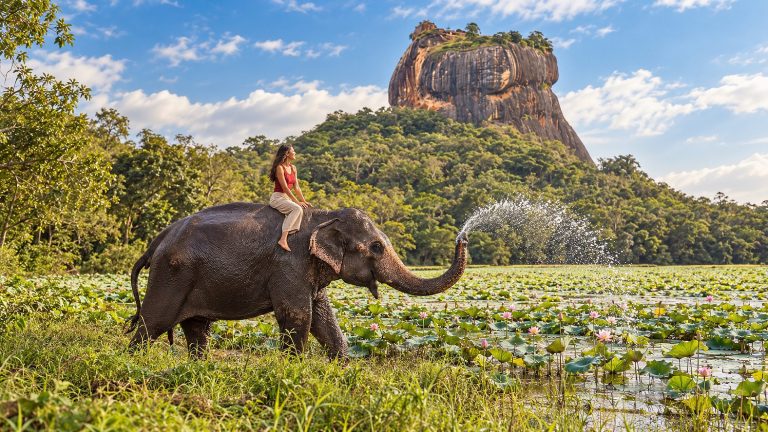
Colombo → Sigiriya → Kandy → Ella
Example · Sigiriya, Kandy and Ella — 7 Days with a Local Guide
7 days · 6 nightsEnglish, German
For your datesand your group
Check trip priceWhat to know before you go.
Researched by Sarisara, with sources.
The Vel festival is Colombo’s own version of a Hindu temple festival, built around the vel — the sacred spear carried by the god Murugan (also worshipped in Sri Lanka as Kataragama Deviyo). It began in 1874, when a cholera outbreak stopped Hindu pilgrims from travelling to the god’s main shrine at Kataragama in the south. Unable to make that journey, Colombo’s Hindu community began holding the same devotion locally, at the city’s own Murugan and Kathiresan temples, and it has continued as an annual city festival ever since.
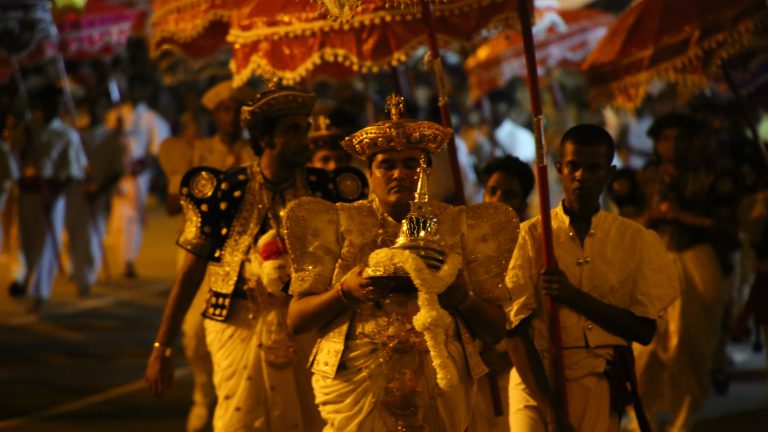
The festival’s best-known sight is its procession of decorated wooden chariots (sometimes called temple cars or coaches), pulled through the streets by devotees rather than by animals or vehicles. The route runs through different parts of Colombo over the festival period, including Pettah, Kirulapone, Bambalapitiya and Wellawatte. Along the way, families break coconuts as offerings, and some devotees fulfil personal vows made to Murugan in dramatic ways — rolling along the ground, having their cheeks pierced with small skewers, or being suspended by hooks from a moving structure. Despite the scale of these acts, eyewitness accounts describe the crowds as orderly and the atmosphere as one of devotion rather than spectacle.
The festival falls in the Tamil month of Aadi, which is why it is also called the Aadi Vel, and runs across roughly early August in most years. For a visitor, it is one of the most visible and unusual Hindu street festivals in Sri Lanka precisely because it happens in the middle of the capital, not at a single rural temple.
July – August Hindu
Falls in the Tamil month of Aadi (which overlaps mid-July to mid-August), giving it the name Aadi Vel. This research found the festival described as happening in early August in the years it was reported on, but could not confirm the exact date-setting rule or specific 2026/2027 dates.
The exact dates follow the moon and are confirmed each year closer to the time.
Free to watch and take part.
There is no entry fee to watch the street procession. It is a public festival held in Colombo's streets.
Dress modestly as for any Hindu religious event, and remove your shoes if you enter a temple building.
Not dressed right? This research did not confirm any dress-code enforcement specific to watching the street procession, as opposed to entering a temple itself.
This research did not confirm a fixed published schedule of which street sees the procession on which day; this is best checked locally closer to the date.
No single organiser — the Hindu Murugan and Kathiresan temples of Colombo jointly hold the festival each year
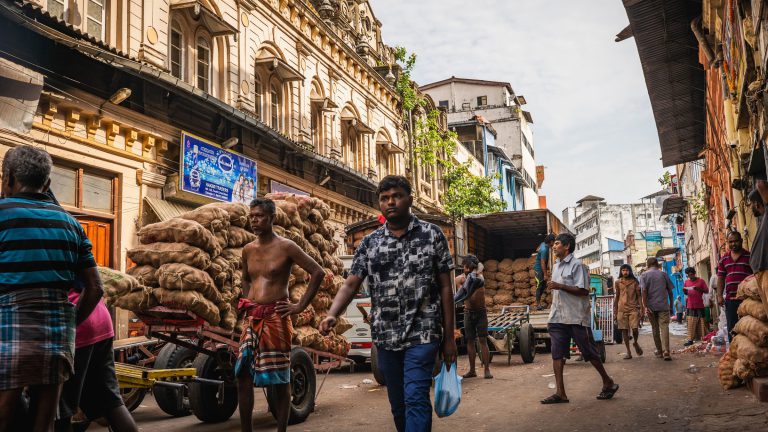
Processions pass through Pettah, Kirulapone, Bambalapitiya and Wellawatte, Colombo, Sri Lanka
Trips, experiences and stays in and around Colombo.
Trips
Colombo → Sigiriya → Kandy → Ella
Experiences
It means “may you live long”. It is how we say hello in Sinhala, and how we greet you every time you come back.
One free account keeps your trips, your saved places and your messages with your guide in one place.
Fire dancers light the road before the elephants of the Esala Perahera.