What to know before you go.
Researched by Sarisara, with sources.
Galle Fort is a fortified old town on Sri Lanka’s south coast, built up by the Portuguese and then much more extensively by the Dutch in the 17th century, with the British adding more later. Unlike most tourist sites, it is not a museum behind a fence — it is a living town, with homes, shops, cafes, schools and places of worship inside its walls, exactly as it has been for centuries. This is why UNESCO listed it in 1988, under the name “Old Town of Galle and its Fortifications”: it is one of the best-preserved examples anywhere in Asia of a European fort built to a local, tropical setting.
Most visitors come to walk the ramparts — the solid stone and coral walls that circle the whole town, built to face the sea and absorb its force (famously, the fort’s walls helped protect much of the old town from the 2004 tsunami). A full lap of the ramparts covers about 3 km and takes roughly two hours at a relaxed pace, passing bastions, lighthouses, old cannons, and sweeping views of the Indian Ocean.
Inside the walls, narrow streets lined with Dutch colonial buildings hold boutique shops, art galleries and places to eat. Several working places of worship sit inside the fort too, including a 1755 Dutch Reformed church, an Anglican church, a mosque, and a Buddhist temple — all welcome visitors, with the usual respect expected at any active religious site.
Because Galle Fort is an open town, you can walk in at any hour; there is no gate, ticket counter or closing time for the fort itself.
Free entry.
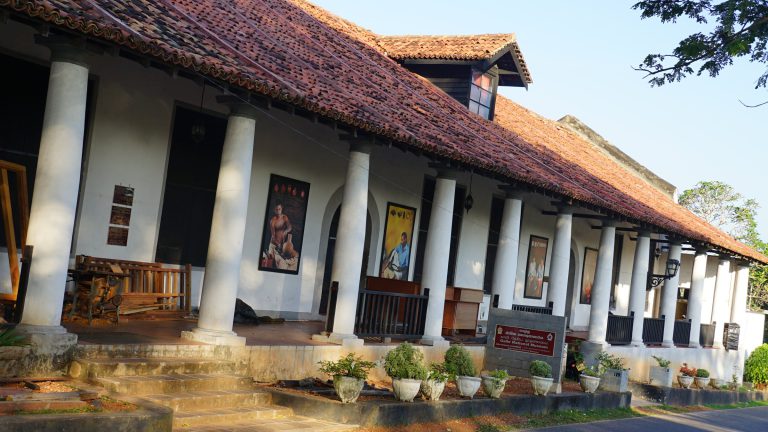
There is no entrance ticket for Galle Fort itself. The National Museum of Galle and other buildings inside the fort charge their own separate entrance fee, listed on their own pages.
There is no dress code for walking the fort itself. Cover your shoulders and knees if you go into one of the churches, the mosque or the temple inside the walls.
Not dressed right? There is no rule checked at the fort's entrance, since it is an open town. Individual churches, the mosque or the temple inside may ask you to cover up before you enter their own building.
Confirmed across multiple independent sources: Galle Fort has no gate and no closing time. Only the buildings and museums inside it, such as the National Museum of Galle, have their own set hours.
Galle Heritage Foundation, with the Department of Archaeology Official website
Galle Fort, Galle, Southern Province, Sri Lanka
Trips, experiences and stays in and around Galle.
It means “may you live long”. It is how we say hello in Sinhala, and how we greet you every time you come back.
One free account keeps your trips, your saved places and your messages with your guide in one place.
Fire dancers light the road before the elephants of the Esala Perahera.