In short

What to know before you go.

Time needed45 minutes to 1 hour, longer if you study the murals closely
How easyEasy — flat ground, a few shallow steps, barefoot walking indoors and around the shrine
Best timeEarly morning, for the best light on the murals and fewer visitors
EntryFree entry (donations welcome)

About this place

Researched by Sarisara, with sources.

About this activity

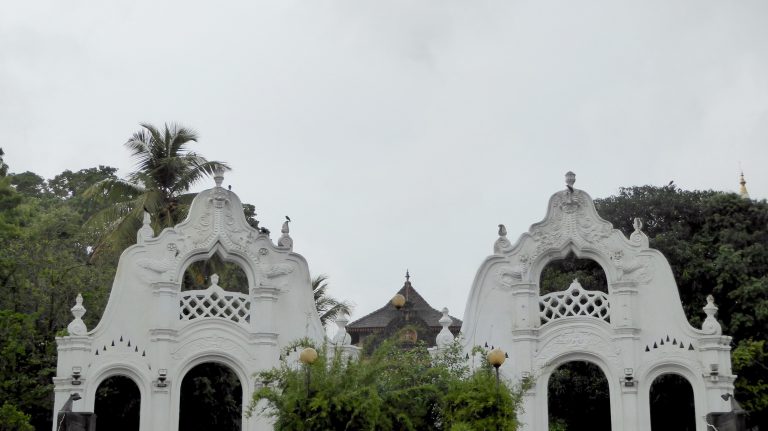
On the banks of the Kelani River, a few kilometres from central Colombo, stands one of Sri Lanka’s most important Buddhist temples. Tradition holds that the Buddha visited this exact spot during his third visit to the island, eight years after his enlightenment, and that a king later built a jewelled shrine here to mark the occasion, enshrining a throne the Buddha is said to have used. The temple has been rebuilt many times since; the Portuguese damaged it badly in the 16th and 17th centuries, and most of the buildings you see today date from a major restoration that began in 1888.

Inside, the walls and ceiling are covered in murals painted over twenty years by the Sri Lankan artist Solias Mendis, showing scenes from the Buddha’s life, the Jataka tales (stories of the Buddha’s past lives), and moments from Sri Lankan history. A reclining Buddha image and a sacred Bodhi tree, grown from a cutting of the original tree in Anuradhapura, are both part of the complex.

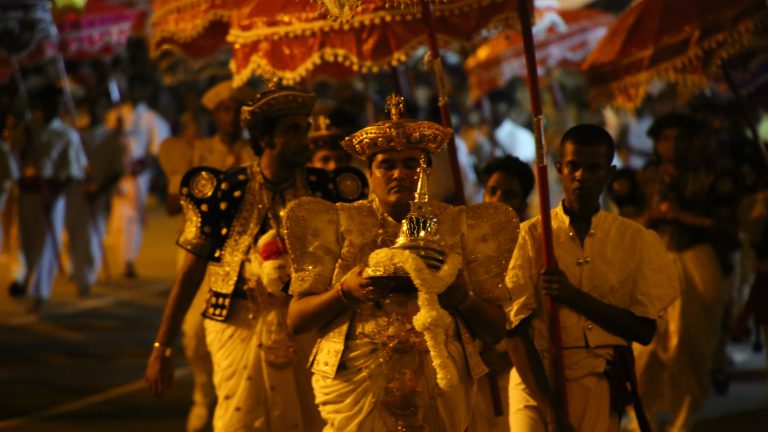
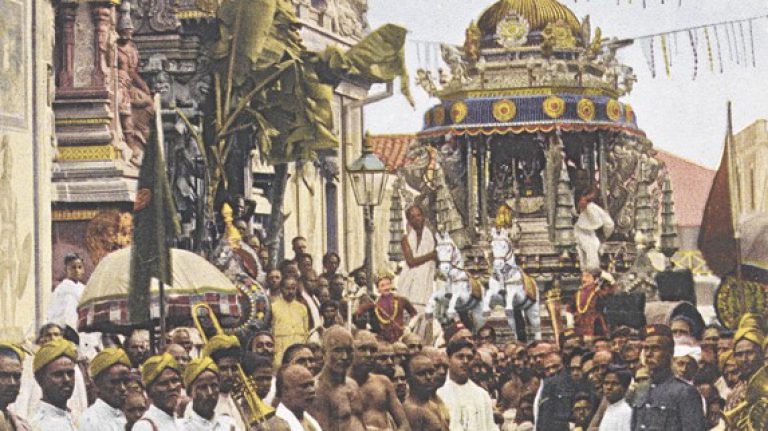
The temple grounds also hold a separate shrine to Vibhishana, a guardian figure from the Ramayana said to have been crowned king of Lanka at this very place — which makes the site sacred to Hindu visitors too. Each January, on the Duruthu full-moon Poya day, the temple holds the Duruthu Maha Perahera, a large procession with dancers, drummers and decorated elephants, one of the biggest Buddhist festivals near Colombo.

Entrance ticket

Free entry.

There is no entrance ticket. Donations at individual shrines are welcomed but optional, and are not collected by Sarisara or included in your trip price.

What to wear

Cover your shoulders and knees, and take off your shoes before entering any shrine room or the stupa platform.

Wear

  • A top with sleeves that covers your shoulders
  • Trousers, a long skirt, or a long dress that covers your knees
  • Light, modest clothing — white is traditional for Sri Lankan worshippers, but not required of visitors
  • Socks, if you do not want to walk fully barefoot indoors

Avoid

  • Shorts
  • Short skirts or short dresses
  • Sleeveless tops or vests
  • Shoes or sandals inside any shrine room or on the stupa platform

Not dressed for the temple? Some sources mention a sarong or shawl can be rented or bought at the entrance for a small fee, but this was not independently confirmed for this page, so it is best to arrive already dressed correctly.

How to behave

Please do

  • Take off your shoes before entering any shrine room or stepping onto the stupa platform
  • Keep your voice low and move slowly, as this is a working temple, not a museum
  • Let monks and worshippers praying or making offerings go first
  • Step back towards the door when leaving a shrine room, rather than turning your back on the Buddha statue
  • Ask before photographing anyone praying up close

Please do not

  • Do not stand with your back to a Buddha statue to take a photo
  • Do not point your feet at a Buddha statue when you sit down
  • Do not touch the murals, statues, or offerings left by others
  • Do not raise your voice, play music, or run on the temple grounds
  • Do not bring pets onto the grounds
  • Do not eat, drink, or smoke inside the shrine rooms

Allowed and not allowed

Allowed

  • Photography around the grounds and (per most sources) inside the shrine rooms, as long as you are respectful of worshippers and do not turn your back on a Buddha statue
  • Visiting the separate Vibhishana shrine, which is open to Hindu as well as Buddhist visitors

Not allowed

  • Shoes or sandals inside any shrine room or on the stupa platform
  • Pets of any kind on the temple grounds
  • Photography that disturbs people who are praying

What to bring

  • A small donation, in Sri Lankan rupees, if you would like to give one — it is optional
  • Socks, if you prefer not to walk fully barefoot indoors
  • A light scarf or shawl, in case you need extra cover for your shoulders
  • Water and a hat — parts of the courtyard are in full sun

Opening times

Opening hours

  • Open every day of the week, About 6:00 AM to 8:00 PM

Special days

  • The Duruthu Maha Perahera, held on the Duruthu full-moon Poya day (usually January), is the temple's biggest festival — a night procession with dancers, drummers and decorated elephants, typically starting around 8 PM and continuing towards midnight
  • Poya (monthly full-moon) days bring more local worshippers than an ordinary day

Hours are reported consistently by independent travel sources, but this round of research did not find them confirmed on an official temple or government page.

Good to know

  • This is a working pilgrimage temple, not a museum — expect monks, worshippers, and sometimes visiting officials, since the temple holds national significance
  • A no-shoe policy applies at every shrine room and around the stupa platform, with shoe racks provided at the entrances
  • The murals are easiest to appreciate in good daylight, which usually means a morning visit
  • One source states wheelchair access is available on request, though this was not independently re-confirmed this round — ask your guide in advance if this matters for your visit
  • The temple sits beside the Kelani River and close to the separate Vibhishana shrine, both worth the short walk if you have time
  • Research for this page did not confirm whether a camera/photography fee applies inside the shrine rooms — check with your guide

Who runs this place

The temple's own chief incumbent (not a government body) — currently Venerable Professor Kollupitiye Mahinda Sangharakkhitha Thera

Where it is

Kelaniya, Gampaha District, Sri Lanka (a northeastern suburb of Colombo)

In the same area

Trips, experiences and stays in and around Colombo.

Trips

Experiences

JanuaryFestival

Colombo · Colombo District

Navam Perahera

A Sarisara place
Entry not in trip price
DecemberFestival

Colombo · Gampaha District

Duruthu Perahera

A Sarisara place
Entry not in trip price
June to JulyFestival

Colombo

Vel Festival

A Sarisara place
Free to watch
Attraction

Colombo · Colombo District

Pettah Market

A Sarisara place
Free entry
See everything in Colombo →
Photo credits